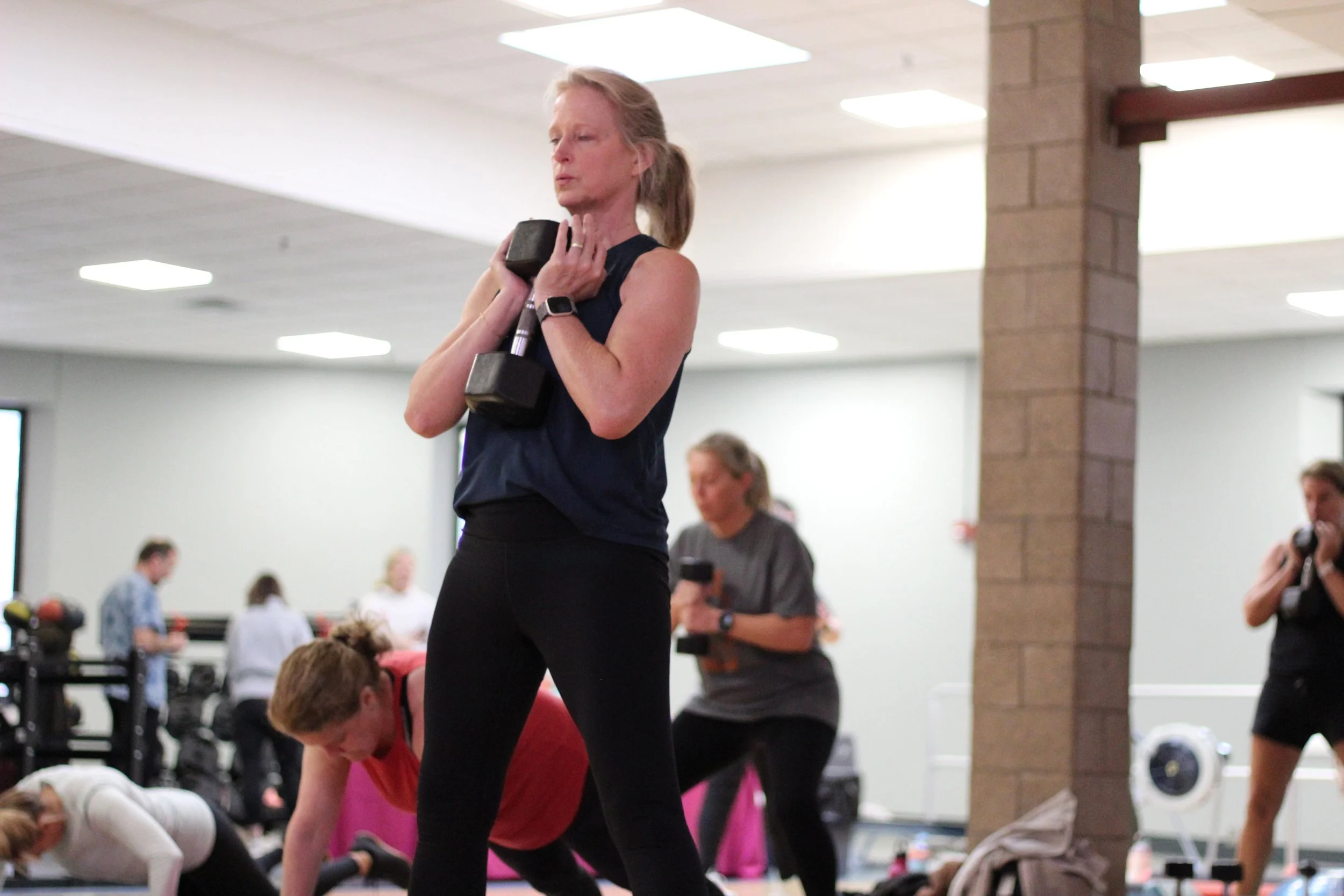
Exercise won't make perimenopause disappear, but the right kind helps more of it than most women expect. Strength training is the big one: it helps protect muscle and bone, supports your metabolism and is linked with better mood and sleep. Daily walking helps sleep, stress and blood sugar. What usually doesn't help is piling on more hard cardio, which can leave you more tired and more wired. Below, I go symptom by symptom so you know what to do for the thing that's bothering you most. If you want it all built into a plan, that's what my programs are for.
Most women I talk to in their 40s aren't asking "what workout should I do." They're asking why they feel like a stranger in their own body. So let's start there.
Why perimenopause changes how exercise feels
In perimenopause your hormones don't fall in a straight line. They swing up and down for several years. Estrogen helps with muscle repair, bone, sleep and how your body handles blood sugar, so when it's unpredictable, so are you. One week you feel strong. The next you're exhausted after the same workout.
That's not you getting lazy or weak. It's physiology. The answer is to pick the kinds of exercise that work with those changes, not against them.
What exercise helps, symptom by symptom
Poor sleep
What helps: walking outside, especially in the morning, and regular strength training. Daylight helps set your body clock, and women who train regularly tend to sleep better.
What to watch: hard workouts late in the evening can keep some women awake. If that's you, move them earlier.
Mood swings, anxiety and irritability
What helps: almost any regular movement, but strength training and walking are the easiest to stick with. Exercise is consistently linked with lower anxiety and better mood. Training with other women helps too. It's a lot easier to show up when someone's expecting you.
What to watch: don't punish yourself with a workout on a bad day. A short walk counts.
Weight gain around the middle
What helps: strength training first, then walking, then protein. Muscle is what keeps your metabolism from sliding, and lifting is how you keep it. Protein feeds that muscle; my guide to how much protein a woman over 50 should eat every day has the numbers.
What doesn't: more cardio and eating less. That combination tends to cost muscle, and losing muscle makes the middle harder to change, not easier. No exercise spot-reduces belly fat, whatever the ad said.
Losing muscle and strength
What helps: lifting weights that are genuinely heavy for you, two or three times a week. This is the symptom exercise helps most directly. Muscle responds at any age when you ask it to.
Bone density
What helps: strength training and impact you can handle, like brisk walking, step-ups and stairs. Bone responds to load. I explain the why in boost bone health: why women over 50 need strength training.
What to watch: if you've been told you have low bone density, get clearance on which exercises are right for you before adding heavy lifting or jumping.
Achy joints
What helps: strength training done with control. Stronger muscles take load off your joints. Mobility work before you lift helps too.
What to watch: sharp pain is a stop sign. Achy and stiff that loosens up as you warm up is usually fine to train through.
Hot flashes
Honest answer: the research on exercise and hot flashes is mixed. Some women notice fewer, some don't. Exercise is still worth doing for everything else on this list. If hot flashes are wrecking your life, that's a conversation for your doctor.
Brain fog and low energy
What helps: short, regular movement. A 10 minute walk after lunch does more for afternoon fog than another coffee. Over weeks, steady training tends to raise your baseline energy.
What doesn't help in perimenopause
Long, punishing cardio every day. It adds stress when your recovery is already shaky.
Chasing the scale with crash diets. You lose muscle, and muscle is the thing you need most right now.
All-or-nothing weeks. Skipping everything on a bad week, then overdoing it on a good one. Shrink the workout instead of skipping it.
Tiny weights forever. If you could do 30 more reps, the weight isn't asking your body for anything.
So what should you actually do?
Lift two or three times a week. Walk most days. Keep hard cardio short. Eat enough protein. That's the core of it, and I lay out exactly how to fit it into a real week in perimenopause workouts: how to train through the transition.
If you're not sure whether you're in perimenopause yet, or you're dealing with symptoms that scare you, see your doctor. Exercise is a big part of feeling better, not a replacement for medical care.
You don't have to wait until it's over
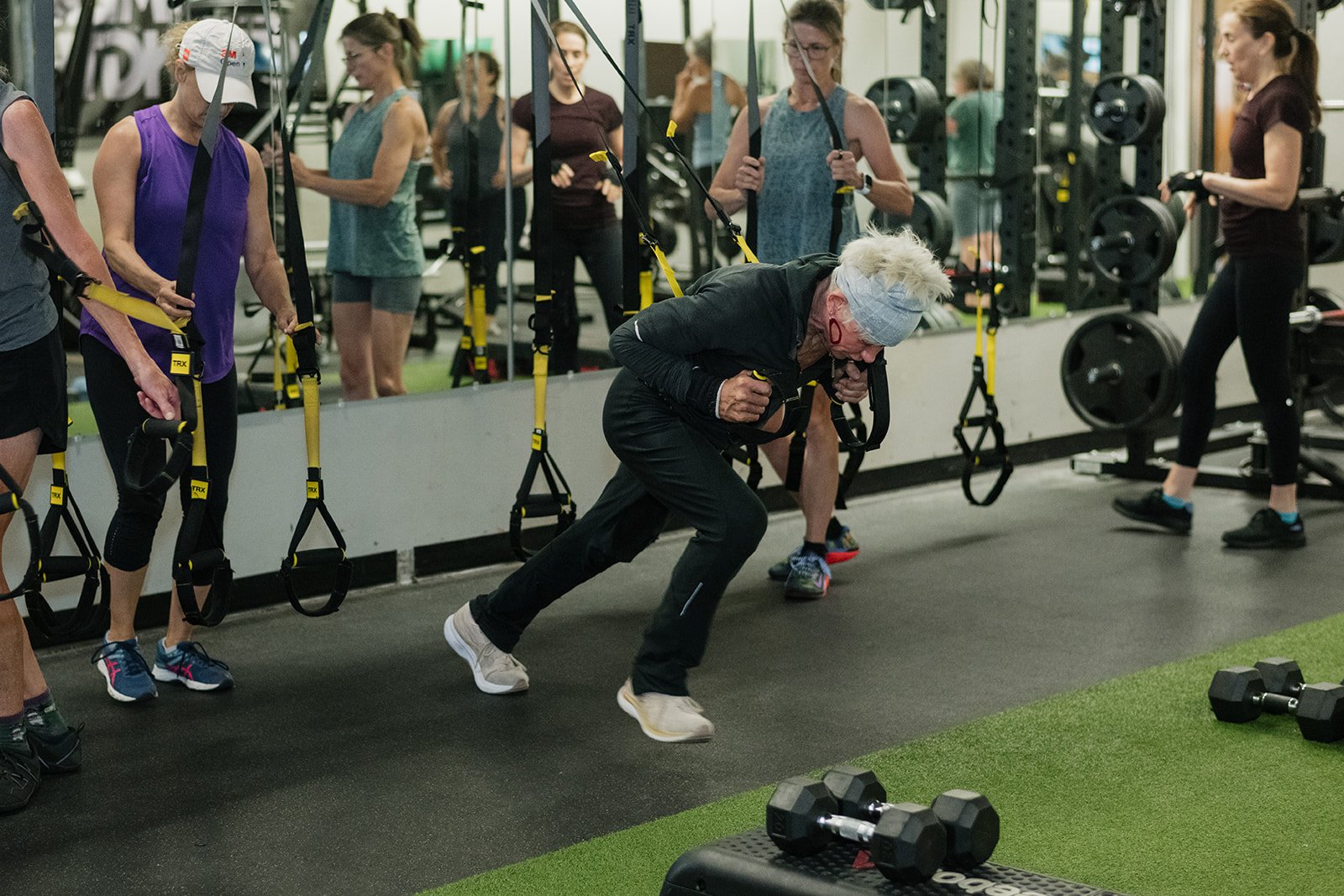
Most women think they'll get back to working out once this phase passes. The women who come out the other side strong are the ones who start in the middle of it. For more on the fitness side, my 5 fitness strategies to master menopause and 10 essential tips for getting fit after menopause pick up where this leaves off.
When you're ready to stop piecing it together, find the program that fits your week. If you'd like to train from home with a group of women in the same stage of life, Fit 4 Life is a good place to start. Have a question first? Call me at (218) 393-4671. You're invited.
Frequently asked questions
What is the best exercise for perimenopause?
Strength training, two or three times a week. It helps protect muscle and bone, supports your metabolism and is linked with better mood and sleep. Add daily walking and keep hard cardio short.
Can exercise help perimenopause symptoms?
It helps several of them. Regular exercise is linked with better sleep, steadier mood, stronger bones and muscle, and easier weight management. The evidence for hot flashes is mixed.
Does strength training help perimenopause belly fat?
It helps by building and keeping muscle, which supports your metabolism. Pair it with walking and enough protein. No exercise burns fat from one spot.
Should I do more cardio during perimenopause?
Usually not more hard cardio. Walking most days is great. Long, intense sessions can add stress and eat into your recovery during these years.
Is it too late to start exercising in perimenopause?
No. Perimenopause is one of the best times to start, because the muscle and bone you build now carries into your 50s and 60s.