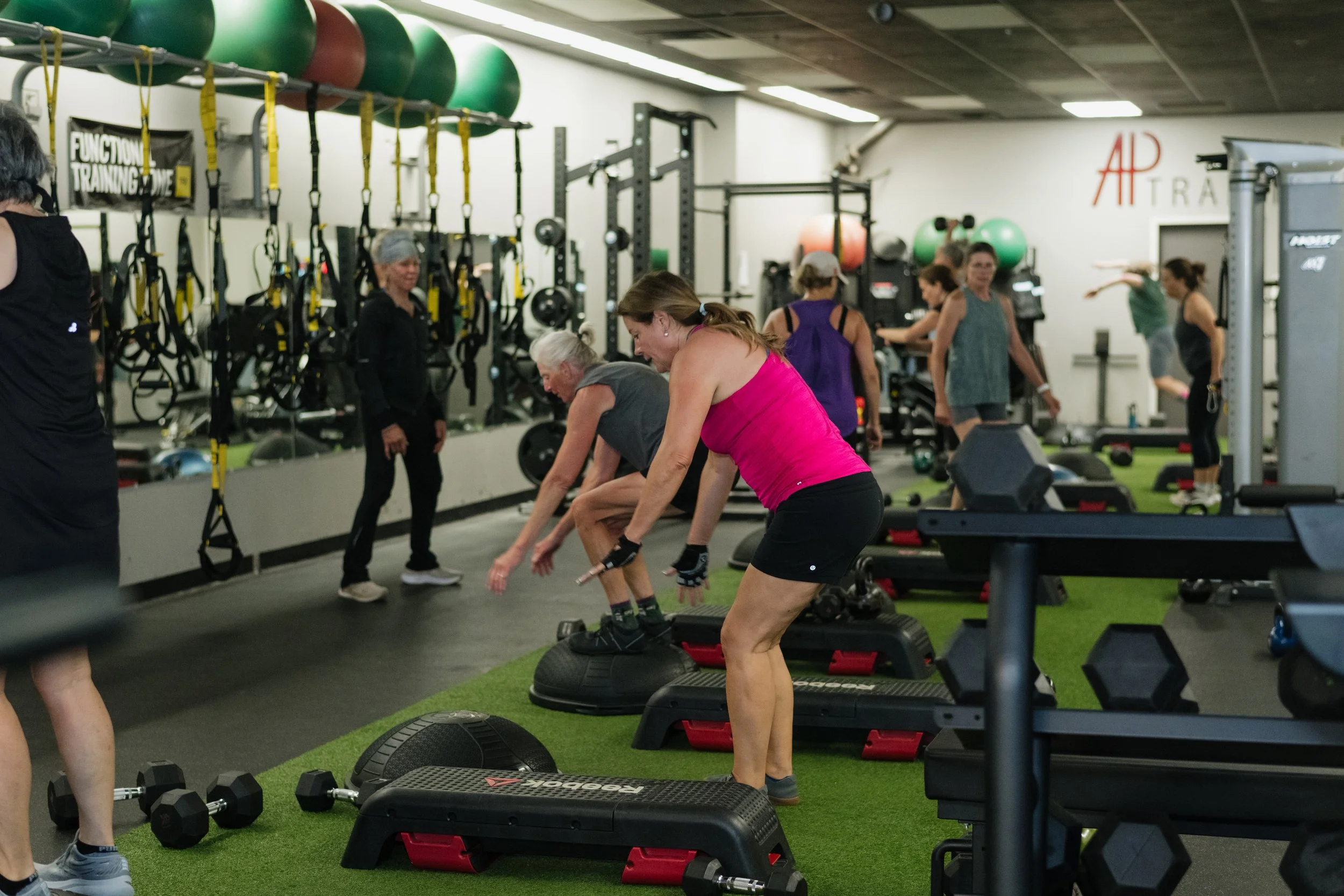
If your periods have gone unpredictable, your sleep is worse than it used to be, and the workouts that used to work have stopped working, you are probably in perimenopause. The training answer is simpler than the internet makes it: strength train two or three times a week, walk most days, keep the hard cardio short, and spend a few minutes on balance. That is the plan. Everything below is how to actually run it in a real week, and it is the same structure behind my programs.
Most of the women who ask me about this are somewhere between 42 and 52. Some of them have been told to do more cardio, which is usually the opposite of what they need right now.
What perimenopause changes about training
Perimenopause is the stretch of years before your periods stop for good, often starting in the early to mid 40s and running anywhere from two to ten years. Hormones are not falling in a straight line during that time, they are swinging. That is why one week you feel like yourself and the next you feel like you are training underwater.
Here is what that means for your training. Recovery is less predictable, so the same session can feel easy one week and brutal the next. Sleep gets interrupted, and poor sleep blunts what you get from a workout. And muscle and bone start needing a stronger stimulus to hold their ground.
What that adds up to is not less training. It is smarter training with more built-in flexibility.
Your weekly perimenopause workout plan
Here is what a good week looks like. Print it, stick it somewhere, adjust it to your life.
Two or three strength sessions (30 to 45 minutes)
This is the non-negotiable part. Each session should hit a squat, a hinge, a press, a pull, and something on one leg. Two or three sets of 8 to 12 reps, with a weight where the last two reps are genuinely hard.
This is the piece that protects your muscle and your bone during the exact years you are most likely to lose both. If you only have time for one thing, this is the one thing.
Walking, most days (20 to 40 minutes)
Walking is the perfect perimenopause cardio: it helps your heart, it helps your mood, it helps your sleep, and it asks almost nothing of your recovery. Outside is better than a treadmill if you can manage it, because daylight helps the sleep problem too.
One short hard effort a week (10 to 15 minutes), optional
If you like intensity, keep it brief. Six to eight rounds of 30 seconds hard and 90 seconds easy on a bike, a hill, or a rower is plenty. Long, punishing cardio sessions tend to backfire in perimenopause: they raise stress, hurt sleep, and eat into the recovery your strength work needs.
Five minutes of balance and mobility, most days
Stand on one leg while you brush your teeth. Do a few ankle circles and hip openers before you lift. This is the least glamorous item on the list and the one my clients thank me for ten years later.
How to train on a bad week
This is what the plans you find online leave out. Some weeks in perimenopause you will sleep four hours a night and feel wrung out. Do not cancel. Shrink.
Cut to one strength session instead of three. Do the same movements with half the weight and half the sets. Walk instead of doing your hard interval day. The goal on a bad week is to keep the habit alive, not to make progress. Progress happens on the good weeks, and there will be more of those than you expect once you stop trying to force the bad ones.
That rule, shrink rather than skip, is the single biggest difference I see between the women who come out of these years strong and the women who come out of them starting over.
What about hot flashes, weight, and everything else?
Strength training helps more of it than you would think, and I go through the symptom side in detail in master menopause with these 5 fitness strategies. For the food and hormone side, the ultimate guide to diet and exercise during menopause covers what actually changes and what to do about it.
One thing worth saying plainly here: if your midsection is changing, that is hormonal, not a character flaw, and more cardio is not the fix. Muscle is. And no exercise spot-reduces anything, whatever the ad said.
Do not wait until it is over
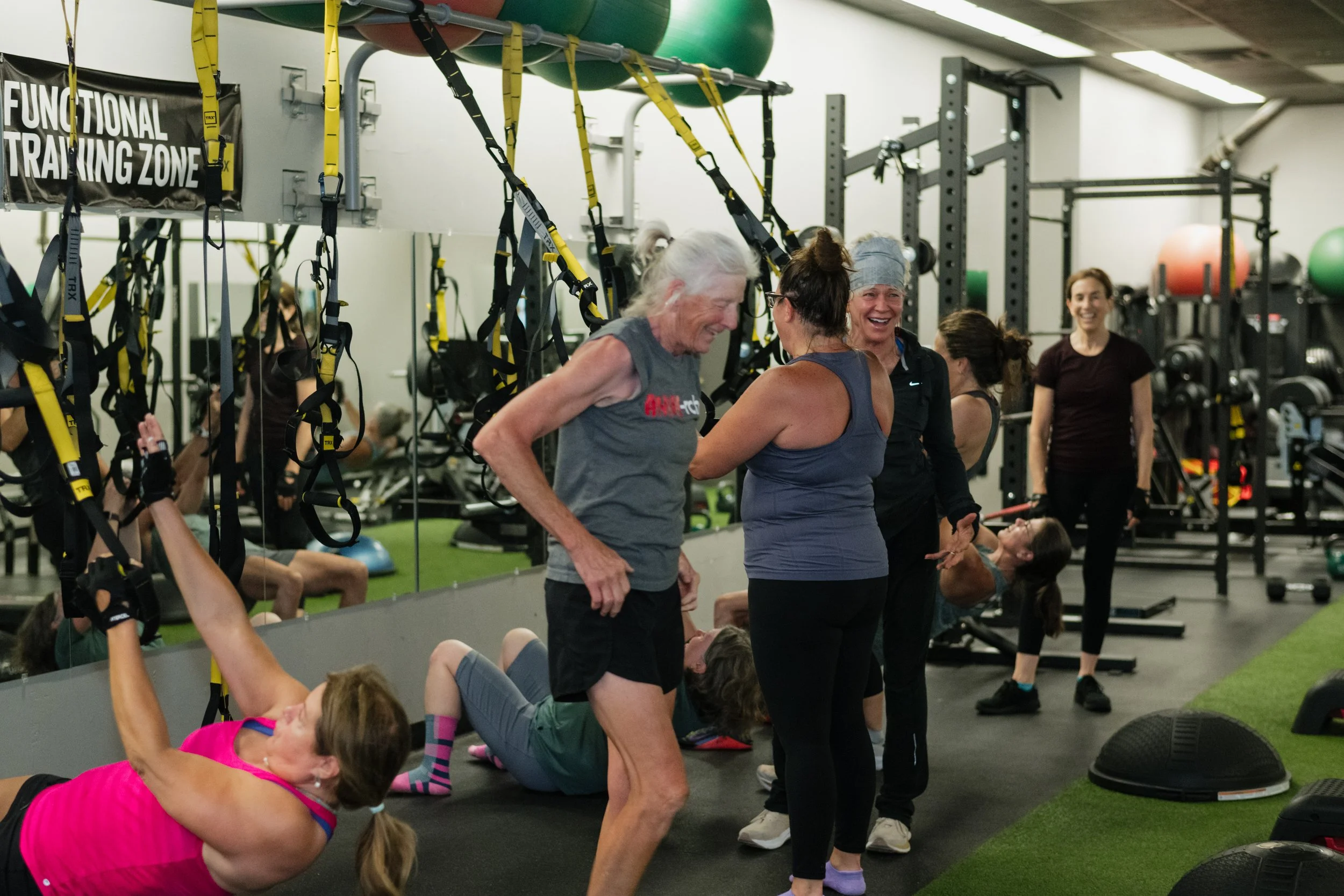
The women who sail through the far side of menopause are almost always the ones who started lifting during perimenopause, not after. You are in the window right now where a couple of hours a week buys you a decade of capability.
Start with two strength sessions this week. If you want them written out for you so you can stop deciding and start doing, see my programs and pick the one that matches your schedule, or start with the follow-along workouts in Fit 4 Life if you would rather train at home. And if you have already crossed over into menopause proper, exercise and menopause: the best workouts to feel strong again is the version of this written for you.
Frequently asked questions
What is the best type of exercise during perimenopause? Strength training, two or three times a week. It protects the muscle and bone you are most at risk of losing during these years. Add daily walking and a few minutes of balance work, and keep hard cardio short.
Should I do more cardio during perimenopause? Usually not. Long, hard cardio adds stress and eats into recovery at a time when recovery is already less reliable. Walk most days, keep intense efforts to about 10 to 15 minutes once a week, and put your energy into lifting.
How do I exercise when perimenopause wrecks my sleep? Shrink the session instead of skipping it. One shorter, lighter strength workout and a walk beats writing off the week. Keep the habit going and push harder on the weeks you feel better.
Can exercise help perimenopause symptoms? Strength training and regular walking are consistently linked with better sleep, steadier mood, better bone density, and easier weight management during this stage. They are not a cure for symptoms, and they are worth doing anyway.
When should I start strength training if I think I am in perimenopause? Now. The earlier you build muscle and bone in this window, the more you carry into your 50s and 60s. Women in their late 30s and early 40s benefit from starting too.