How to Build Muscle After Menopause
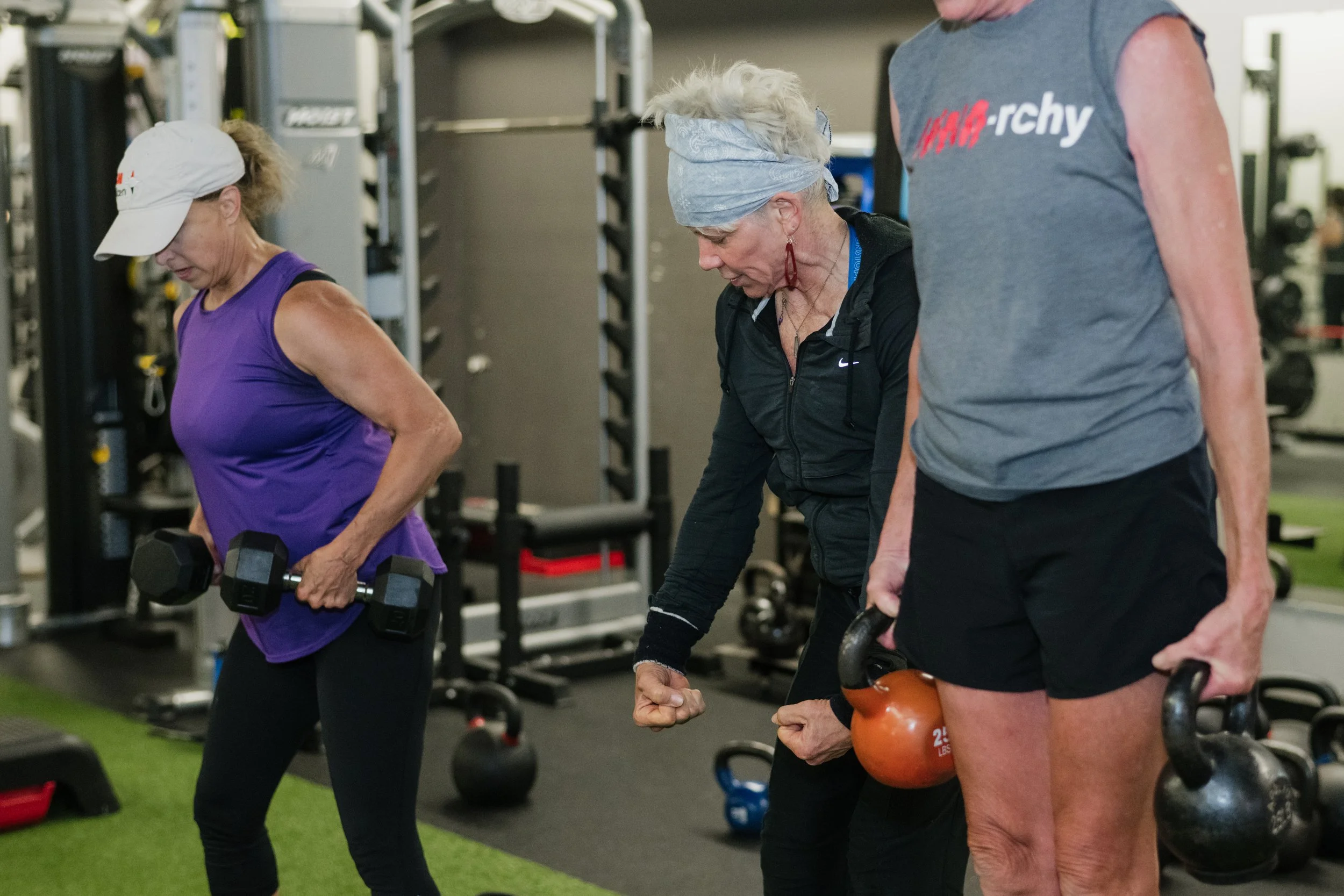
Yes, you can still build muscle after menopause. It takes more deliberate effort than it did at 35, but the machinery still works. What you need is enough weight to challenge the muscle, enough protein to rebuild it, and enough patience to keep going for longer than a month. That is the honest answer, and it is what the whole Built 2 Last coaching approach is built on.
I am 64. I am stronger now than I was in my 40s, and I built most of that after menopause, not before it. I am not unusual. I just kept lifting when a lot of women were told to switch to walking.
What actually changes after menopause
Estrogen drops, and estrogen was helping you in ways nobody explained at the time. It supported muscle repair, it helped protect bone, and it influenced where your body stored fat. When it falls off, three things tend to follow: muscle is a little harder to build and a little easier to lose, bone density declines faster, and weight starts settling around your middle instead of your hips.
Here is the part that matters. None of that means muscle growth stops. It means the signal has to be louder. A weight that was enough at 40 is not enough now. Protein you could get away with skipping now has to be planned. The response is still there, you just have to earn it more deliberately.
The three things that actually build muscle after 50
There are only three, and most women are missing at least one.
1. Lift heavy enough to be hard
This is the one women skip. Two or three sets of 8 to 12 reps where the last two reps are genuinely difficult. Not tiring. Difficult. If you finish a set and could have done six more, that set did not ask your body for anything, and your body will not give you anything back.
The fastest way to know your weight is right: the last rep should be slow, and the rep after that one should feel questionable.
2. Add a little more over time
Muscle grows in response to a demand that keeps rising. That is progressive overload, and it does not have to be dramatic. Two more pounds. One more rep. One more set. My full breakdown is in progressive overload techniques for women over 50, but the short version is: change one small thing every week or two and keep a note of it.
3. Eat enough protein, and enough food
You cannot build muscle out of nothing. Most women over 50 need somewhere in the range of 25 to 35 grams of protein at each meal, spread across the day rather than dumped into dinner. I go through the numbers in how much protein do women over 50 need.
And eat enough overall. When I rebuilt my own body I was eating 2300 to 2500 calories a day. I was not starving. I lost fat slowly and I kept my muscle, and that order matters. Chronic under-eating is the most common reason a woman lifts for six months and sees nothing.
A realistic weekly plan
Two full-body strength sessions a week is the minimum that works. Three is better if your schedule allows it. Each session should cover a squat, a hinge, a press, a pull, and something single-legged.
Walk on the days between. Sleep as well as you are able, because muscle is repaired while you are asleep, not while you are training. And leave a day between lifting sessions, especially in the first couple of months. Recovery is slower after 50, and training sore on top of sore is how women end up hurt and discouraged.
My guide to building muscle strength in older adults walks through the same framework in more detail if you want the longer version.
How long before you see anything?
Strength changes first. Most women feel it in the first three to four weeks, before anything looks different: stairs feel easier, the same weight moves faster, you stop bracing on the arms of the chair.
Visible change in muscle takes longer, usually three to six months of consistent training and adequate protein. That gap between feeling stronger and looking different is where most women quit. Do not. The feeling is the honest signal that it is working.
What to stop worrying about
You will not get bulky. That fear has cost more women their strength than anything else I can name. Building noticeable muscle mass after menopause is hard work that happens slowly, and the amount you can add is the amount that makes you look capable, not the amount you are picturing.
You are also not too late. I have started women at 60, at 68, at 74. The muscle responds. It is the only system in the body that answers back this reliably when you ask it something.
Where to start this week
Pick two days. Do a squat, a hinge, a press, a pull, and a carry, three sets each, with a weight that makes the last two reps hard. Add protein to breakfast, which is the meal most women skip it at. Do that for eight weeks before you judge anything.
If you want it planned rather than guessed, that is what I do for a living. Take a look at my programs and pick the one that fits your week, or look at Built 2 Last if you would rather have me build it around you personally.
Frequently asked questions
Can you really build muscle after menopause? Yes. Lower estrogen makes it slower and means you have to train harder and eat more protein, but muscle still grows in response to challenging strength training at any age past menopause.
How much protein do I need to build muscle after menopause? Most women do well aiming for roughly 25 to 35 grams at each meal, spread through the day. Getting protein at breakfast matters most, because that is the meal it usually goes missing from.
How often should I lift to build muscle after menopause? Two to three full-body strength sessions a week, with a rest day in between. More is not better if it costs you recovery.
How long does it take to build muscle after menopause? Expect to feel stronger within three to four weeks and to see visible change in three to six months of consistent training with enough protein.
Will lifting weights make me bulky after menopause? No. With lower estrogen and lower testosterone, adding significant size is slow and difficult. What you will build is dense, useful strength.
Is it too late to start at 60 or 70? It is not. Muscle responds to strength training well into your 70s and beyond. Starting later just means starting lighter and progressing patiently.