Kettlebell Workouts for Women Over 50 You Can Do at Home
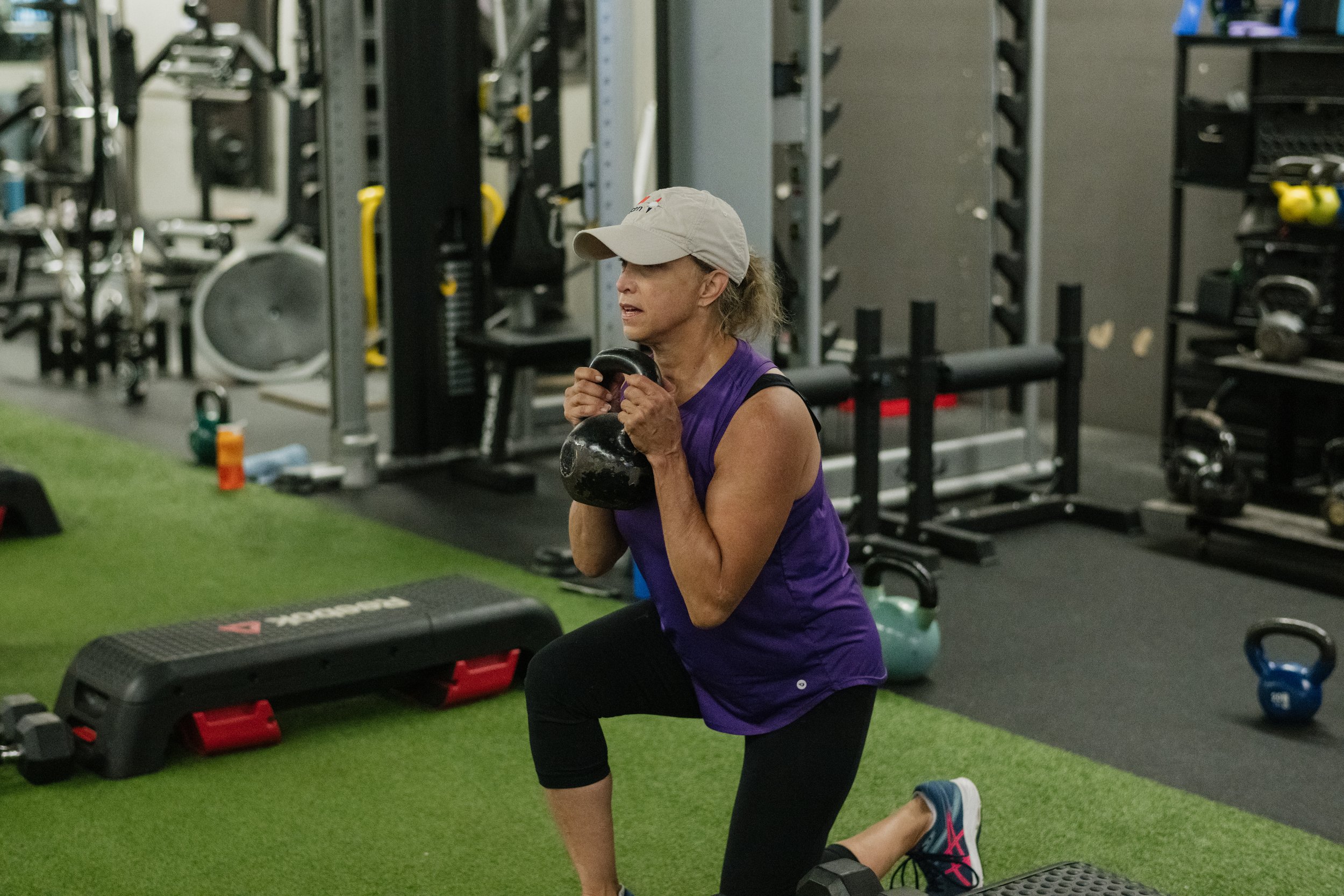
You need one kettlebell, about six feet of floor, and 20 minutes. That is the entire setup for a full-body strength workout at home. A kettlebell handles the squat, hinge, press, row, and carry patterns all by itself, which is why it is the single most useful piece of equipment I recommend after a pair of dumbbells. It is also the reason so many of the at-home sessions in Fit 4 Life need almost nothing to run.
A lot of women my age look at a kettlebell and picture somebody flinging it over their head. Forget that. Almost everything worth doing with a bell happens below shoulder height and at a controlled speed.
Why a kettlebell is worth it after 50
The handle is the whole point. Because the weight hangs below your hand instead of sitting in it, a kettlebell is easy to hold at your chest, easy to carry at your side, and easy to swing behind you in a hinge. That means one bell covers movements that would otherwise take two or three pieces of gear.
It also trains grip strength, which is not a vanity thing. Grip strength is one of the better everyday markers of how well you are holding onto muscle overall, and it is what lets you carry two bags up the porch steps without setting one down.
And it stores in a corner. My clients who train at home stick with what is visible and simple. A kettlebell by the couch gets used. A machine in the spare bedroom does not.
What size kettlebell should a woman over 50 start with?
Most women do well starting with a 12 to 18 pound bell (in kilos, that is roughly 6 to 8 kg). If you are already strength training, 18 to 26 pounds (8 to 12 kg) is a reasonable start for lower-body work.
Here is the practical test. You should be able to do 8 clean goblet squats where the last two are hard but your back stays tall. If you are guessing between two weights, buy the heavier one for squats and hinges and use dumbbells or body weight for the pressing moves until you catch up. Lower-body movements always tolerate more weight than shoulder movements do.
One bell is genuinely enough to start. Add a second, heavier one when the first stops feeling like work.
Six kettlebell exercises to build your workout around
Learn these six and you can build a hundred different sessions.
1. Goblet squat
Hold the bell by the horns at chest height, elbows tucked in. Sit down between your hips, keep your chest tall, and stand up. The bell up front actually helps you stay upright, which is why this is usually the easiest squat to learn.
2. Kettlebell deadlift
Stand with the bell on the floor between your feet. Push your hips back, keep a long flat spine, grab the handle, and stand up by driving your hips forward. This is the safest way to practice picking things up off the ground, which you already do a dozen times a day.
3. Half-kneeling press
Kneel on one knee with the bell racked at your shoulder, then press straight up. Kneeling takes your low back out of the equation and forces your core to do its job. Easier on the shoulders than a standing press for most women.
4. Single-arm row
Brace your free hand on a chair, hinge forward with a flat back, and pull the bell toward your ribs with your elbow. This is your posture insurance. Do more of these than you do presses.
5. Suitcase carry
Hold the bell at your side like a heavy grocery bag, stand tall, and walk 30 to 40 feet without leaning. Switch hands. Simple, unglamorous, and one of the best core exercises there is.
6. Kettlebell swing (once the hinge is solid)
This is the one people picture, and it is the last one you should learn. The swing is a hard, fast hip hinge, not a front raise with your arms. The bell should stop around chest height on its own. Only add swings once your deadlift feels automatic and your back stays quiet the day after.
A 20-minute at-home kettlebell workout
Warm up with two minutes of easy marching, arm circles, and a few body-weight squats. Then do three rounds of the following, resting about a minute between rounds.
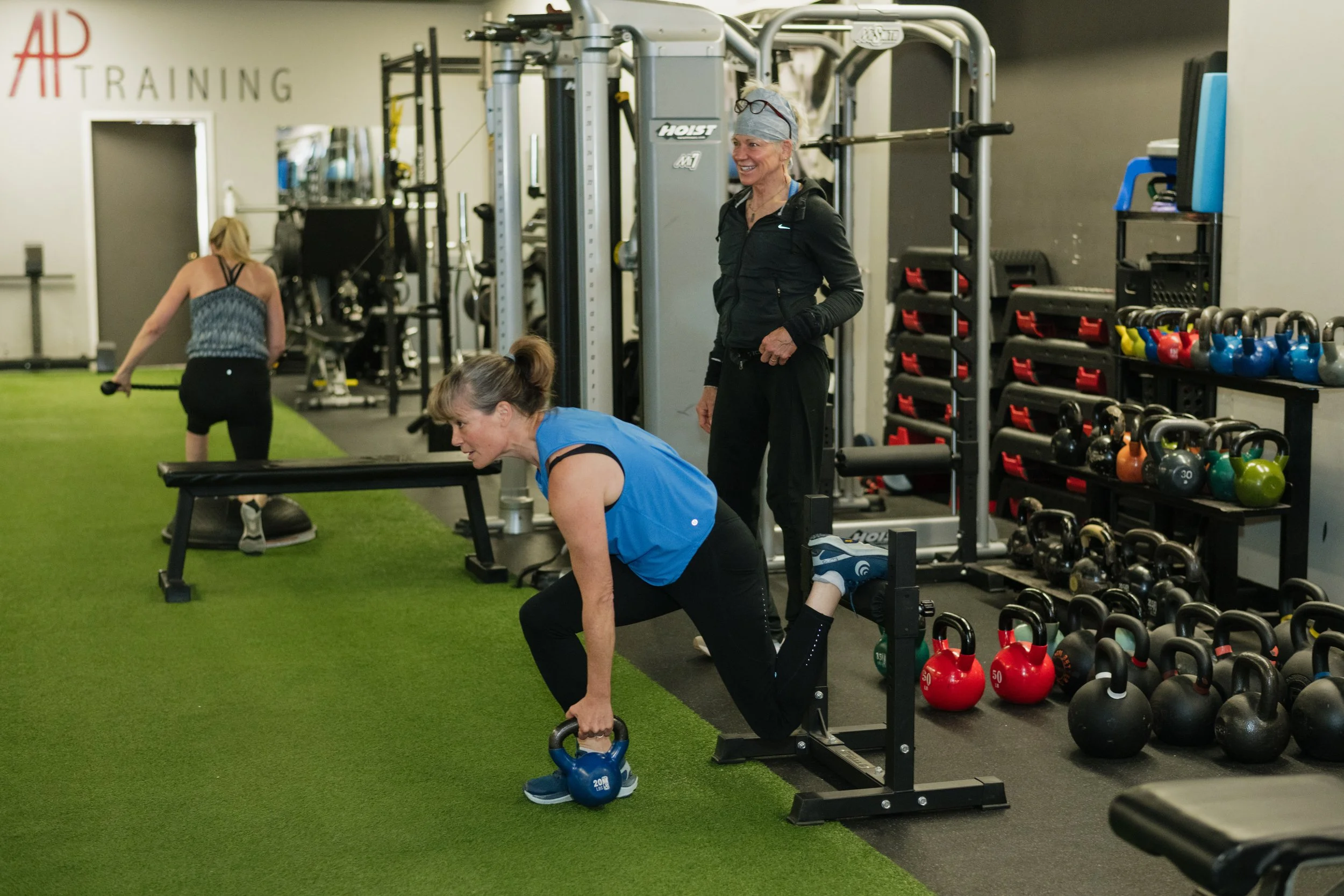
Goblet squat: 8 reps
Kettlebell deadlift: 10 reps
Half-kneeling press: 6 reps each arm
Single-arm row: 8 reps each arm
Suitcase carry: 30 to 40 feet each side
That is it. Twice a week, with a day of rest in between, and you are training every major muscle group you own. If you have dumbbells too, alternate this with the sessions in my dumbbell workouts for women over 50 you can do at home so you are not doing the exact same thing every week.
The mistakes I see most often
The big one is swinging before the hinge is ready. If you cannot deadlift the bell with a flat back for ten clean reps, you are not ready to swing it, and this is the fastest way I know for a woman to hurt her back with a kettlebell. Learn to pick it up properly first. The swing will still be there in a month.
The other one is buying too light. A 5 pound bell is a paperweight. Your legs and back are stronger than you think, and a weight that never challenges you will not change anything. While you are at it, slow down. Control the lowering part of every rep and a lighter bell will give you more than a heavier one thrown around.
Where to go from here
Get one bell in the 12 to 18 pound range, put it somewhere you will trip over it, and do the workout above twice this week. If you want more variety once that gets comfortable, my effective home strength workouts for women over 50 cover what to do with the rest of your gear.
And if you would rather stop building your own sessions, that is exactly what I am for. My programs hand you the plan week by week so you can just pick up the bell and go. See my programs and find the one that fits your space and your schedule.
Frequently asked questions
Are kettlebells safe for women over 50? Yes, when you start with the slower movements. Goblet squats, deadlifts, rows, presses, and carries are all controlled and low risk. Save the swing until your hip hinge is solid, and check with your doctor first if you have a back, hip, or shoulder issue.
What size kettlebell should a beginner woman over 50 buy? Usually 12 to 18 pounds (6 to 8 kg). You should manage about 8 goblet squats with good form where the last two feel hard. If you already lift, start heavier for squats and deadlifts.
Can one kettlebell be enough? Yes. One bell covers squats, hinges, presses, rows, and carries, which is a complete full-body workout. Add a heavier second bell later for lower-body work.
How often should I do a kettlebell workout? Two sessions a week is plenty to build strength, with at least one day of rest in between. Three is fine once you have a few weeks behind you.
Are kettlebells better than dumbbells for women over 50? Neither is better, they are just different. Dumbbells are easier for pressing and single-arm work; kettlebells are easier to hold at your chest and to carry. If you own both, use both.