The Best Compound Exercises for Women Over 50
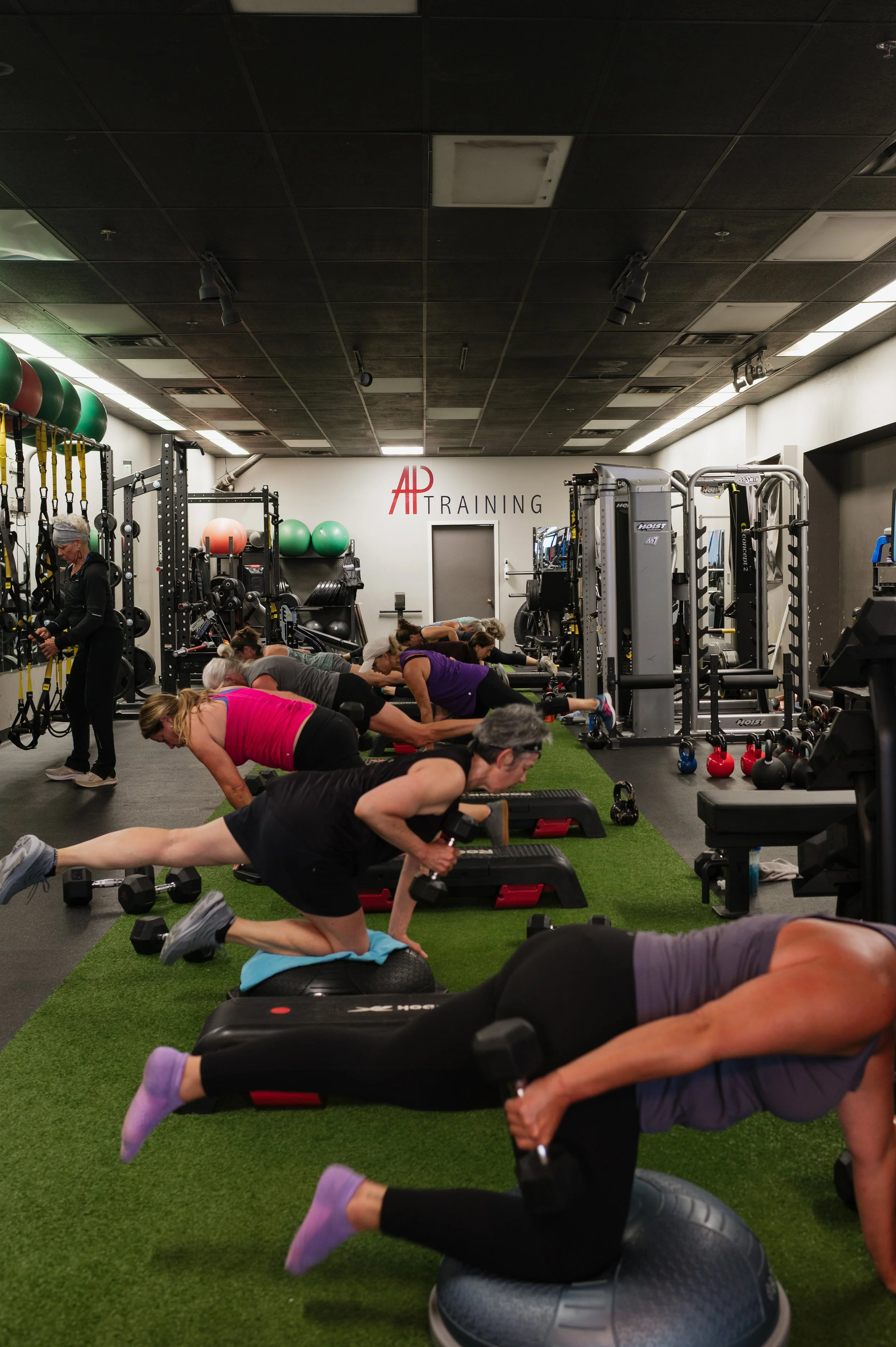
If you only have three hours a week to train, do not spend them on one muscle at a time. Compound exercises work several muscle groups and joints together, so you get more strength, more muscle, and better balance out of every minute you spend. There are six of them worth knowing, and they are the backbone of every program I write, including the workouts inside Fit 4 Life.
I am 64. I run eight classes a week and I train before my first client most mornings. I do not have time for a 90-minute split routine and neither do you. Six movements, twice a week, done well. That is the whole strategy.
What is a compound exercise?
A compound exercise moves more than one joint at a time and uses several muscle groups together. A squat bends your hips, knees, and ankles and asks your legs, glutes, and core to work as a team. A biceps curl bends one joint and works one muscle. Both have a place. Only one of them changes how you get up off the floor.
That is the practical difference. Compound lifts train patterns your body already uses all day, which is why they carry over to real life instead of staying in the gym.
Why compound lifts matter more after 50
After menopause, muscle gets harder to hold onto and easier to lose. So does bone density and balance. Compound movements hit all three at once, because loading several big muscle groups through a full range is the signal your body needs to keep them.
They are also the fastest route to strength you can feel. My clients notice it first in ordinary moments: carrying groceries in one trip, standing up from a low chair without pushing off the arms, getting a suitcase into an overhead bin. That is what compound training buys you.
The six compound movements every woman over 50 needs
Every good program covers these six patterns. Learn the pattern, then pick whichever version fits your body and your equipment.
1. Squat: sit down and stand up
The most useful movement you own. Start with a sit-to-stand from a sturdy chair, feet about hip width, chest tall, and drive through your whole foot on the way up. When that feels easy, hold a dumbbell at your chest (a goblet squat) and go a little lower.
2. Hinge: bend at the hips, not the back
This is the deadlift pattern, and it is the one that protects your low back for the rest of your life. Push your hips backward, keep a long flat spine, and let your knees soften. A dumbbell Romanian deadlift is the version most women should start with. You should feel it in your hamstrings and glutes, never in your low back.
3. Push: press something away from you
A chest press or an overhead press. Both build shoulders, chest, and triceps and both make pushing a heavy door or lifting a bag overhead feel easy again. If overhead pressing bothers your shoulders, press at an incline instead.
4. Pull: row something toward you
Rows are the antidote to the shoulders-forward posture most of us drift into. A single-arm dumbbell row with your other hand braced on a bench or a chair is the simplest place to start. Pull with your elbow, squeeze the shoulder blade, and do not let your torso twist.
5. Lunge or step-up: work one leg at a time
Single-leg work is where balance and hip strength get built, and it is the difference between catching yourself on an uneven sidewalk and going down. Step-ups onto a low, solid step are easier on the knees than lunges for most women. Start with body weight and hold something for balance if you need it.
6. Carry: pick it up and walk
The most underrated exercise there is. Grab a heavy dumbbell in one hand, stand tall, and walk 30 to 40 feet. Switch sides. Carries train your grip, your core, and your posture all at once, and they look exactly like carrying a bag of dog food to the car, because that is what they are.
A 30-minute full-body compound workout
Do this twice a week, with at least a day in between. Two rounds if you are new, three once you have a few weeks in.
Goblet squat: 8 to 10 reps
Dumbbell Romanian deadlift: 8 to 10 reps
Dumbbell chest press: 8 to 10 reps
Single-arm dumbbell row: 8 to 10 reps each side
Step-up: 8 reps each leg
Suitcase carry: 30 to 40 feet each side
Rest 45 to 60 seconds between exercises and take longer if you need it. Pick a weight where the last two reps are genuinely hard while your form stays clean. If you can rattle off 15 easy reps, the weight is too light to change anything.
If you want more structure than a single workout, my gym strength training routines for women over 50 show you how to build these six into a full week.
How to get stronger without getting hurt
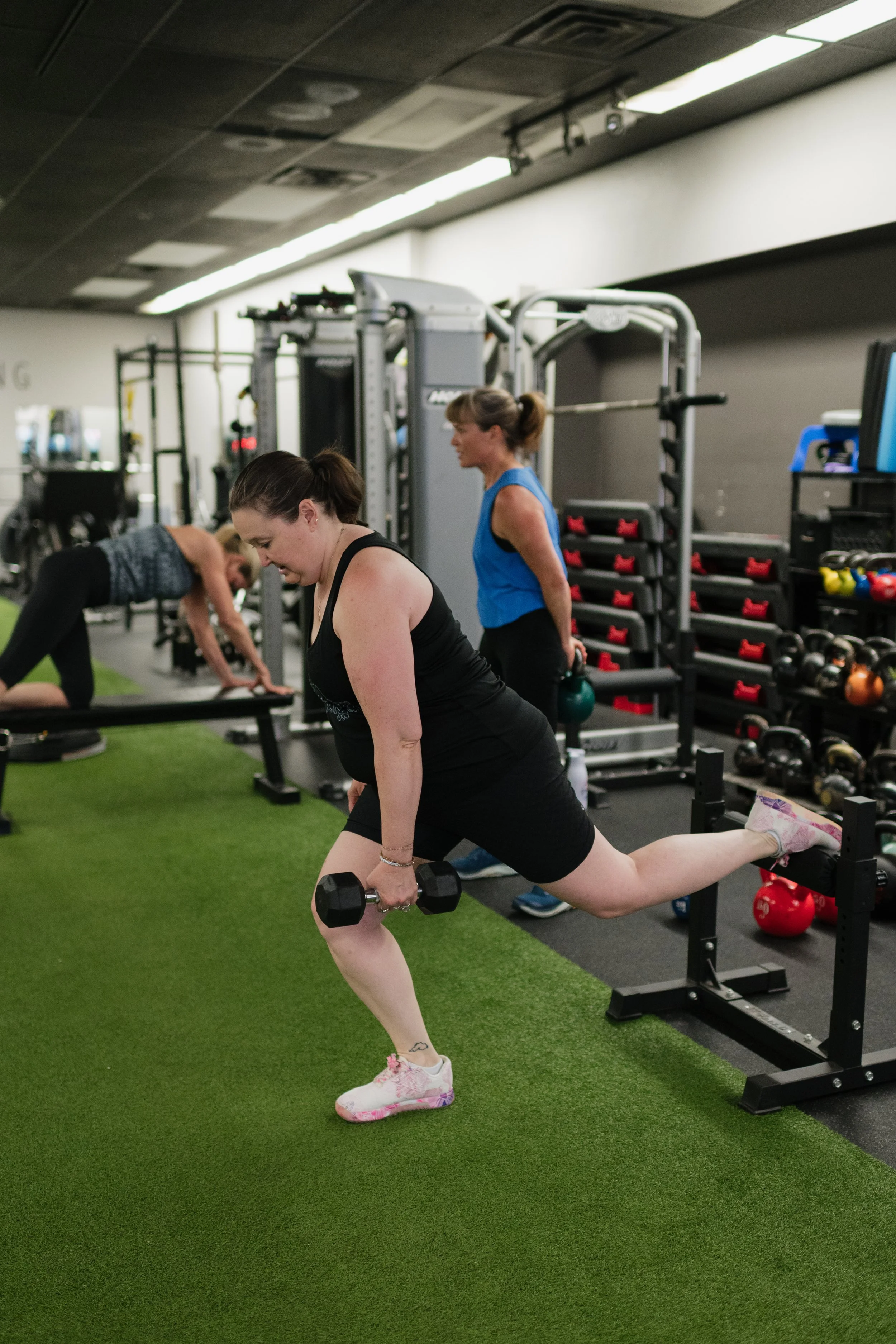
Here is the honest order of operations. Learn the pattern with body weight or a very light weight. Once you can do all your reps with clean form two sessions in a row, add a small amount of weight. That is it. Slow, boring, and it works. I go deeper on the how and when in my guide to progressive overload techniques for women over 50.
Two things to watch. Soreness in the muscle is fine and normal, especially early on. Sharp pain in a joint is not, and it means stop and change the version of the movement, not push through. And if a lift hurts, there is almost always a version that does not: press at an incline, squat to a higher chair, hinge with a shorter range.
What compound exercises will not do
They will not spot-reduce anything. No exercise does. They will not replace eating enough protein, and they will not do much if you only train when you feel like it. What they will do is give you back strength you thought was gone, and they will do it faster than anything else you can spend your training time on.
Stop guessing and start lifting
Pick two days this week. Do the six movements above with whatever weight you have. That alone will put you ahead of most women your age.
If you would rather have the whole thing planned out, that is what I do. My programs give you the workouts, the weights, and the progression so you never have to wonder if you are doing the right thing. Take a look at my programs and pick the one that fits your week. And if you already have dumbbells at home, my dumbbell workouts for women over 50 you can do at home is a good place to put this to work today.
Frequently asked questions
What are the best compound exercises for women over 50? Squats, hip hinges (deadlifts), presses, rows, step-ups or lunges, and loaded carries. Those six patterns cover your whole body and carry over directly to everyday movement.
How often should a woman over 50 do compound exercises? Two full-body sessions a week is enough to build real strength, with at least one rest day in between. Three is great if your schedule and recovery allow it.
Are compound exercises safe if I have knee or shoulder problems? Usually yes, with the right version. Squat to a chair instead of going deep, press at an incline instead of overhead, and step up onto a lower step. If a movement causes sharp joint pain, change the version rather than pushing through, and check with your doctor or physical therapist about anything ongoing.
Should I do compound or isolation exercises? Build your workout around compound lifts, then add isolation work if you have time and a specific goal, like arms or calves. Compound first is the rule when time is limited.
How much weight should I start with? Light enough that your form holds for every rep, heavy enough that the last two reps feel hard. For many women that is 5 to 15 pounds per hand to start. Add weight when the reps stop feeling challenging.