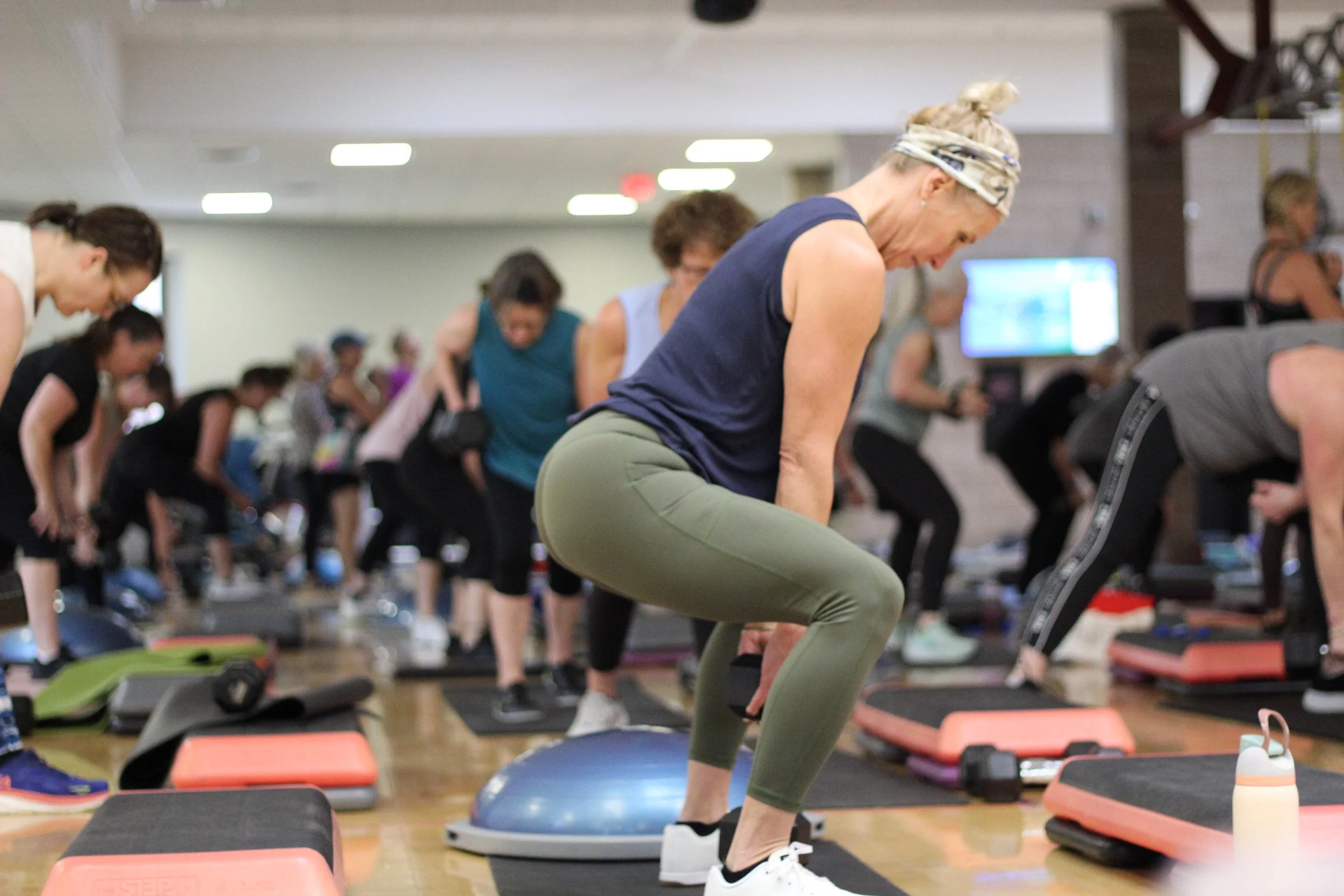
Squats are safe for most women over 50, and they're one of the most useful things you can train. The trick is starting at a depth you can control, with a weight that lets your form stay the same on every rep. Get that right and the squat becomes the exercise that keeps you getting off the couch, out of the car and up off the floor on your own for the rest of your life. It's in every one of my programs for that reason.
I'm 63. I've had two hip replacements, been through menopause, and I'm still here and still lifting. I don't say that to impress you. I say it because "my knees are too bad to squat" is one of the things I hear most, and a lot of the time nobody ever showed that woman a version she could do.
Why squats matter so much after 50
Every time you sit down and stand up, you're squatting. Toilet, car, couch, the floor with your grandkids. The squat trains the exact pattern you need to stay independent, and it works your thighs, hips, glutes and core all at once. That's why it's one of the compound exercises I build every program around.
It also loads your legs and hips, and bone responds to load. After menopause, that matters.
Are squats bad for your knees?
For most women, no. A squat done with control tends to make the muscles around the knee stronger, and stronger muscles take pressure off the joint. What hurts knees is usually going too deep too soon, letting the knees cave in toward each other, or dropping fast to the bottom with no control.
If you've had a knee or hip replaced, or you have pain that's sharp rather than achy, check with your surgeon or physical therapist about depth before you start. Then start high and work down.
How to squat with good form
Here's the checklist I use when I teach the squat.
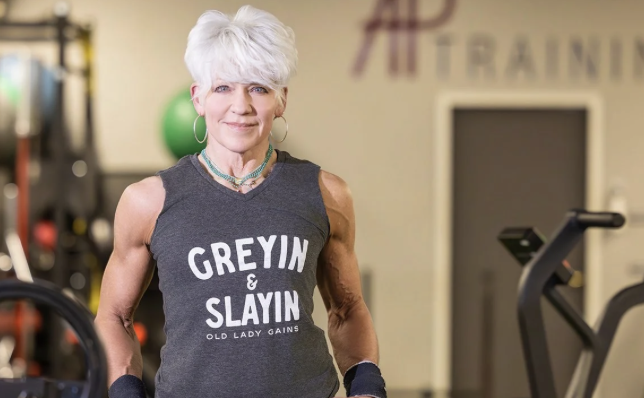
Feet about shoulder-width apart, toes turned out a little. Find the stance that feels natural, not the one in the picture.
Brace. Take a breath in and tighten your stomach like you're about to be poked.
Sit back and down, like you're reaching your hips toward a chair behind you.
Knees follow your toes. Don't let them fall in toward each other.
Chest up, heels down. Your whole foot stays on the floor.
Stand up by pushing the floor away, and squeeze your glutes at the top.
Go down in about three seconds. Stand up with some purpose. Slow on the way down is where the control comes from.
The squat progression I use with women over 50
Don't start with a barbell. Start where you can win, and move to the next step when you can do 3 sets of 10 with good form.
1. Assisted squat
Hold a sturdy counter, a doorframe or suspension straps and squat as far as feels good. Your arms help you balance and take some of the load. This is where a lot of my women start, and there's no shame in it.
2. Box squat
Squat down to a chair or bench, touch it lightly, and stand back up without rocking. The box tells you how deep to go and gives you confidence. Lower the box over time.
3. Goblet squat
Hold a dumbbell or kettlebell at your chest with both hands. The weight in front actually helps you sit back and keep your chest up. For most women this is the squat they'll do for years.
4. Barbell squat
Some women want this, and many of them get there. It's not required. A heavy goblet squat builds plenty of strength.
How heavy, how many, how often
Two or three times a week, 2 to 3 sets of 8 to 12 reps. The last two reps of every set should feel hard. Tired doesn't count. When 12 reps feels easy, add a little weight. That's progressive overload, and it's how the strength keeps coming.
Not sure where you'd land on this list, or worried about an old injury? That's what Built 2 Last is for. It's my one-on-one coaching, and I build the plan around your body and your history so you're not guessing with your knees.
Common squat mistakes I see
Going too deep too soon. Depth is earned. Squat to where your form holds, then go a little lower every couple of weeks.
Heels lifting. Usually a sign of tight ankles. Widen your stance a bit or put a thin plate under your heels while you build ankle mobility.
Knees caving in. Think "spread the floor apart" with your feet.
Rounding forward at the bottom. Lighten the weight and use the box squat until the position feels solid.
Holding your breath the whole set. Breathe in before you go down, breathe out as you stand.
Build the rest of your lower body around it
The squat is the anchor, not the whole plan. Pair it with a hinge like a deadlift or bridge, plus some single-leg work, and you've covered your legs and hips. I lay out the full lower-body list in glute and lower-body exercises for women over 50, and if you train in a gym, my gym strength training routines for women over 50 show where squats fit in a full week.
Start this week
Pick the version above that you can do 10 times with good form. Do 3 sets, twice this week. Write down what you did so next week you can do a little more.
If you'd rather have it planned for you, take a look at my programs and pick the one that fits your week. Questions first? Call me at (218) 393-4671. You're not too old to start. You just haven't had the right support yet.
Frequently asked questions
Are squats safe for women over 50?
Yes, for most women. Start with an assisted or box squat, keep the depth to what you can control, and add weight slowly. If you've had a joint replaced or have sharp pain, ask your surgeon or physical therapist about depth first.
How many squats should a woman over 50 do?
Two or three times a week, 2 to 3 sets of 8 to 12 reps, with a weight that makes the last two reps hard. More isn't better if your form falls apart.
What is the best squat for beginners over 50?
The box squat or the goblet squat. The box shows you how deep to go, and holding a weight at your chest in the goblet squat helps you keep your chest up and sit back.
How deep should I squat after 50?
As deep as you can go while keeping your heels down, your back flat and your knees tracking over your toes. For many women that starts at a chair height and gets lower over a few months.
Can squats help with knee pain?
Controlled squats often help by strengthening the muscles around the knee. If a squat causes sharp pain, stop, shorten the depth, and get it checked.
Do squats help bone density?
Squats load the legs and hips, and bone responds to load, so they're a good part of a plan that helps protect bone after menopause. Pair them with other strength work and enough protein.